
Myths of Money


“money is the most universal and most efficient system of mutual trust ever devised.” ― Yuval Noah Harari, Sapiens: A Brief History of Humankind

I was thinking about the renovations we have done recently and how money has replaced the goods that the barter system would have required in the past. We were fortunate in being a position where we had the money needed to make the exchange of skilled labour for currency. 

My friend prefers using actual money to using her debit card. She says it is because spending it is real. While I tried to persuade her that using a debit card is every bit as ‘real’, she remains unconvinced. In neither of these cases does the money itself have any value other that what we and our society has given to it.

‘Today, all currencies around the world are fiat currencies, and not one single currency is backed by gold or silver … a fiat currency is a piece of paper with a number and two signatures. The faith of the people give it its real value. [emphasis mine] www.ecoomicreason.com [You can read the whole article at 'http://www.economicreason.com/usdollarcollapse/is-the-canadian-dollar-backed-by-gold/ ] You might well say the money is a myth! “Myth is stories about the way things never were, but always are.”― Marcus J. Borg

So then the only worth that money has for me is the worth or value to me of the goods or services I exchange it for. But once I have satisfied my needs and/or wants, then I can begin to accumulate extra money into billions of dollars. But if I don’t need or can’t even use this money to exchange for goods, then it really has no value at all. Which begs the question: why do so many people feel that their value depends on how much they are worth in dollars and cents?
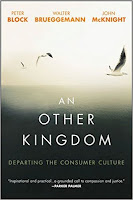
'Money has nothing to do with the quality of life. It needs to be brought back into its original use, which is to be just a medium of exchange...It was an invention to ease trade, and now it has become the primary measure of our value, of how we talk about each other; it defines how productive our lives have been.' ~ An Other Kingdom [2016] by Peter Brock, Walter Brueggemann & John McKnight

Looking at this from another angle, if the ‘value’ of money is only to obtain that which I want or need and to reimburse me for work that I have done, then we need to be sure that it does just that. The value or worth of what I spend my money on, is in effect that which I find valuable or worthy. 
And here I think is where we get to just what is meant by Stewardship both within and without of the church. As Christians, we are told that we should be tithing 10% of our money to the church, whether to not what that particular church is doing has value or worth to us. I believe that is wrong. It is up to us to see that the way we use our money truly reflects that which has value for us. This can be using it in meaningful ways whether by giving to the church or using it in one of the myriad other ways to ensure a decent life for all.


Comments

Popular posts from this blog

This, too ...

  ‘By faith Abraham obeyed when he was called to set out for a place that he was to receive as an inheritance; and he set out, not knowing where he was going.’   -Hebrews 11:8  Dr. Theresa Tam, Chief Public Health Officer of Canada, says this, too, will pass . Dr. Eileen de Villa, Medical Official of Health for Toronto, says this, too, will pass . Justin Trudeau , Prime Minister of Canada, says this, too, will pass . But will it really??? Some days this feels like an unending struggle with just one tiny step forward and not just two, but more like a dozen steps back.  Of course I’m talking about COVID-19 with all its associated variants. We might even be forgiven for rewriting that well known quote from Ecclesiastes to read…. For everything there is a season,…but  just not for this ! Pierre Teilhard de Chardin, a French priest,  might well have been talking about COVID   when he penned the lines below: We should like to skip  The ...

Challenging Faith

“All giving constitutes a challenge to faith because there is no guarantee of a return.” When I heard this statement as part of a sermon on Rogation Sunday, my ears pricked up and my mind started to spin. The rest of the sermon had things to say as well, but this sentence is still the one that has stuck with me. It made, and is still making me think! For those of us who identify ourselves with the church, whenever we hear the word ‘givings’ our minds go immediately to what we put on the offering plate each Sunday and for that we expect, but are not guaranteed, that the church will be there for us when we need it; for weddings, baptisms, funerals and other rites of passage. However what intrigues me about this quotation is that first word. “ ALL giving constitutes a challenge …” And how true it is! Each time we ‘give’ something away and it doesn’t have the expected return, it is upsetting and we have all had that experience. I remember many years ago s...

"A Leap of Faith"

"Leap of faith - yes, but only after reflection"        -  Søren  Kierkegaard "Much of Kierkegaard's authorship explores the notion of the absurd: Job gets everything back again by the virtue of the absurd (Repetition); Abraham gets a reprieve from having to sacrifice Isaac, by virtue of the absurd (Fear and Trembling); Kierkegaard hoped to get Regine back again after breaking off their engagement, by virtue of the absurd (Journals); ... the Christian God is represented as absolutely transcendent of human categories yet is absurdly presented as a personal God with the human capacities to love, judge, forgiver, teach, etc."  (ex cerpt from   Stanford Encyclopedia of Philosophy - emphasis mine) Just what does Kierkegaard’s ‘leap of faith’ mean . . . especially if we consider that,   as he also postulates,  religion is ‘absurd’ [or as the dictionary says, ’ inconsisten...

"Property of Jesus"

Have you seen people wearing shirts that say "Property of Jesus"  Perhaps you have seen them for sale in a Christian book store? Have you stopped to consider just what that motto says about the wearer, or more importantly just what it might say about you? 'Property' in a business dictionary, is defined as: " Quality or thing owned or possessed . In Law: Article, item, or thing owned with the rights of possession, use, and enjoyment,...  " So if we are the property of another, then they have complete control over us. We are in fact their slave . According to the dictionary, a slave is " someone who is legally owned by another person and is forced to work for that person without pay ; a person who is strongly influenced and controlled " I wonder if the persons wearing these shirts ever consider what they are actually proclaiming? If in fact they are the 'Property of Jesus', does that not mean that they have no choic...

'God's Presence'

“God's presence is incarnated in the times and places when and where people are willing to be vulnerable and allow the spirit to work unimpeded.”  ~ Quoted anonymously While reflecting on this statement, the story of the woman with the hemorrhage kept coming into my mind. It is told in all three of the synoptic gospels, but with a difference: in Matthew the woman does not come forward to admit  publicly  that she had touched Jesus’ cloak. If we look at the story in Mark and Luke, we see in both accounts that she was unnoticed in the touching the hem of Jesus’ garment, even by the disciplines, and could have just gone away healed and unknown [as she did in Matthew].  But although she was frightened of what Jesus might say to her because, after all, she had made him ritually unclean, she came forwarded and admitted that she was the one who touched him. And THAT act was what made the most difference to her life.  Yes, she had been healed physically...

An Allegory

Once upon a time there was a knight and his lady, who lived contently for many years in a southern kingdom. As they aged however, their manor became too big for them and so they decided to relocate in a northern kingdom where smaller quarters were available. They left their friends of many years with a sad good-bye and set off for new adventures. They settled quite happily in their new abode, and joined in all the activities and merry-making until one day, they had to drop out of some of the activities because of their declining years.  No one came to ask them why they were no longer taking part. Instead the rest of the folk in that kingdom ignored them and it became very lonely for the knight and his lady The king suggested that they might be happier is a neighbouring kingdom and so they moved a short distance and set up house one more time.  This time though things went well for many years.  Then the king died. The heir apparent had many different ideas about what ...

To walk humbly with your God ...

1 Peter 5:5[b]  …Clothe yourselves, all of you, with humility toward one another, for “God opposes the proud but gives grace to the humble.” Have you ever been asked to chair a committee or lead a discussion, and said “No” even if you secretly wanted to? Have you ever responded to a compliment by belittling the speaker’s words? Have you ever ‘pooh-poohed’ the suggestion that you did something well? Well, I have, to all of the above. After all  weren't  we taught in Sunday school that we should be humble and not think too highly of ourselves? But how many of us have said “I can’t be the secretary because I can’t spell?” or “I don’t like your idea because it isn’t mine?” I wager that, like me, you come up with another excuse like “I’d love too but I’m much too busy!” or “I like your idea but it would never work!” What if we have the meaning of being humble backwards? What if being humble actually means that we are to admit our shortcomings to others rath...

"On Giving Thanks"

Thanksgiving Is usually one of those ‘easy’ times for me.   It is easy to be thankful living with abundance, in safety, with family and friends – so many things to give thanks for, so many blessings undeserved. Some years and for some people, it is not so. What would Thanksgiving mean to me then? How would I deal with it? I came across this prayer not long ago ~           For that which was           For that which is           For that which will be          Thanks be to God And I began to wonder ~ Is the real meaning behind Thanksgiving not so much the ability to be thankful for those things we have in abundance? After all, that is easy.  But rather to be thankful for everything we have been given or experienced in life, or are now experiencing: the highs and the lows, the mountain-top experiences and the valleys of death, the deserts and the abundant har...

What We Really Need....

“The purpose of life is not to be happy. It is to be useful, to be honourable, to be compassionate, to have it make some difference that you have lived and lived well.” ― Ralph Waldo Emerson Not long ago, after helping a friend, they made the comment that they didn’t know how to thank us for all we had done. My answer was not to worry, that it had made us feel useful, adding that was something that didn’t happen all that much in our lives any more. I had realized earlier this year, that we were, in our seventies, officially empty-nesters for the first time with both grandchildren away to university and only their parents and ourselves left to our own devices in the house we shared for 15+ years!  And it was a strange feeling, one of being suddenly less involved in life. However this latest experience with our friend led me into thinking more deeply about the need we have to be useful.  After all we have been useful all our lives. As children we probably had a pet o...

Another Road

“And having been warned in a dream not to return to Herod, they [the Magi] left for their own country by another road.” Matthew 2:12  NRSV Just the other day I was out with a friend. As we were leaving to go home we decided ‘go by another road’ and the comment was made about how biblical that was. But as I heard the preacher’s opening to their sermon this past week, suddenly I had a very different understanding of just what those words meant in the context of the story of the magi. One might say I had an epiphany! We don’t know anything about who wrote the gospels or even when or why the gospels were written. We can surmise that the authors were writing down these stories in an attempt to pass on the transformative effect the life and teachings of Jesus had had on their lives and perhaps the lives of others around them. So I have come to understand the two birth narratives to be an attempt to rewrite his birth showing this importance. As angels sang, he was revered by t...